Search results 411
until 420
of 5664
Even more power for laser power packages
 Either with tremendous force or very quickly in a row - that's how you could describe the current state of laser technology. Physicists at the Max Born Institute (MBI) in Berlin want to combine both…
Elementary particles in couple dance
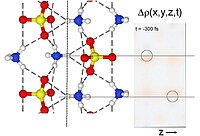 Researchers at the Max-Born-Institut in Berlin directly measure the position of electrons and protons during a chemical reaction with ultrashort X-ray flashes.
Michael Wörner, Flavio Zamponi,…
Researchers at the Max-Born-Institut in Berlin directly measure the position of electrons and protons during a chemical reaction with ultrashort X-ray flashes.
Michael Wörner, Flavio Zamponi,…
How electrons move
 To understand an atom or a molecule, physicists must not only know their internal structure, but also be able to describe the motion of the electrons. Due to the extremely high speed, this was not…
A look inside of molecules
 To not only observe but really understand a chemical reaction, scientists need to know the behavior of electrons within molecules. Until now, it has not been technically possible to observe electrons…
Record set up for shortest controllable time
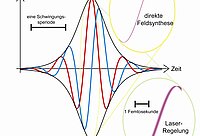 Optical methods allow real-time investigations on the shortest time scales, which are not accessible by other methods. With lasers, light pulses of 100 attoseconds can be generated today (1…