Search results 331
until 340
of 5664
New method for generating magnetic vortex
 Magnetic vortices, so-called skyrmions, are regarded as the hope of a more efficient storage technique and are being intensively researched. Scientists have now discovered a method for generating…
Aspirin tablets help unravel basic physics
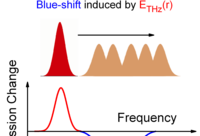 Aspirin in form of small crystallites provides new insight into delicate motions of electrons and atomic nuclei. Set into molecular vibration by strong ultrashort far-infrared (terahertz) pulses, the…
A perfect attosecond experiment
 Attosecond technology is revolutionizing ultrafast laser physics research, enabling experiments that provide unprecedented insight into the structure and time-dependent dynamics of electrons in…
Tumult in sluggish electron existence
 An international team of physicists has for the first time directly observed the scattering behavior of electrons in a non-conducting material. Their findings could benefit the radiation medicine.…